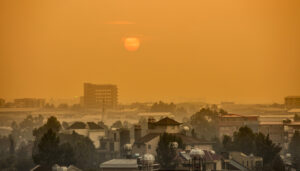
As smoke from Canadian wildfires moves across the Northeast, communities may experience hazy skies, reduced visibility, unpleasant odors, and elevated levels of airborne particulate matter. Although closing windows and doors can reduce exposure, homes and commercial buildings are not completely sealed from outdoor air.
Every time an exterior door opens, smoke-contaminated air can enter the building. Outdoor air may also be drawn inside through fresh-air intakes, loading docks, rooftop HVAC equipment, leaky ductwork, windows, wall penetrations, and other openings. Once smoke enters, the HVAC system may pull those particles into the return-air system and circulate them throughout occupied spaces.
How Wildfire Smoke Enters Buildings
Wildfire smoke can enter homes and businesses through:
- Exterior doors and windows
- HVAC outdoor-air intakes
- Gaps around windows, doors, and wall penetrations
- Leaky ductwork in attics, ceilings, crawlspaces, and mechanical rooms
- Loading docks and frequently used entrances
- Bathroom, kitchen, and general exhaust systems
- Rooftop units and poorly sealed mechanical equipment
Commercial facilities may be especially vulnerable because doors open frequently, HVAC systems serve large areas, and many buildings intentionally introduce outdoor air for ventilation.
Why Smoke Odors Can Remain Indoors
Wildfire smoke contains extremely small particles, ash, soot, and odor-producing combustion compounds. These contaminants can settle on surfaces throughout the building, including:
- Supply and return ductwork
- Dust already accumulated inside air ducts
- Internally lined or insulated duct surfaces
- Air filters
- Blower assemblies
- Evaporator and heating coils
- Air-handler cabinets
- Registers, diffusers, and return grilles
- Carpeting, furniture, ceiling tiles, and other porous materials
Dust inside an HVAC system can hold smoke particles and odors. As air continues moving across those deposits, the residual smoke smell may return whenever the heating or cooling system operates.
In businesses, one contaminated system can distribute odors across offices, classrooms, retail areas, healthcare spaces, municipal buildings, warehouses, and other occupied areas.
Wildfire Smoke and Occupant Health
One of the primary concerns associated with wildfire smoke is fine particulate matter known as PM2.5. These particles are small enough to travel deep into the lungs.
Exposure may contribute to:
- Eye, nose, and throat irritation
- Coughing or wheezing
- Headaches
- Chest discomfort
- Shortness of breath
- Aggravated asthma or respiratory symptoms
- Increased discomfort for children, older adults, employees, customers, and people with heart or lung conditions
For businesses, poor indoor air quality can also lead to occupant complaints, reduced comfort, lower productivity, and increased employee absenteeism.
What to Do During a Wildfire Smoke Event
Homeowners and facility managers should take immediate steps to reduce the amount of smoke entering and circulating through the building:
- Keep exterior doors and windows closed as much as possible.
- Limit unnecessary use of exhaust fans that may create negative pressure and pull outdoor air inside.
- Inspect HVAC filters frequently and replace them when dirty.
- Use the highest-efficiency filter the HVAC system can safely accommodate.
- Confirm that filters fit properly without gaps around the frame.
- Check outdoor-air intakes and ventilation settings with an HVAC professional.
- Keep rooftop units, air handlers, and mechanical rooms properly sealed.
- Consider portable HEPA air-cleaning units in heavily occupied or sensitive areas.
- Monitor local outdoor air-quality conditions before increasing outdoor-air ventilation.
Businesses should coordinate with their HVAC contractor or facility department before changing ventilation settings, since outdoor-air requirements, building pressure, and occupancy needs must remain properly balanced.
Why Filters Alone May Not Solve the Problem
Filters are an important first line of defense, but they may not remove contamination that has already settled inside the HVAC system. A filter also cannot clean dust and smoke residue from duct surfaces, coils, blower components, air-handler cabinets, or registers.
During a significant smoke event, filters may become loaded much faster than normal. A dirty or restrictive filter can reduce airflow, increase energy consumption, and place additional strain on HVAC equipment.
The Importance of Cleaning After Any Smoke Event
The same concerns apply after more than just wildfires. HVAC inspection and cleaning may also be appropriate following:
- Structure fires
- Cooking fires
- Electrical fires
- Furnace or boiler malfunctions
- Fireplace or chimney smoke events
- Vehicle fires near a building
- Industrial smoke releases
- Prolonged tobacco or vaping exposure
- Nearby demolition or combustion activity
Smoke particles can travel throughout a building and enter areas that were never visibly affected. Because HVAC systems connect multiple rooms and occupied zones, they should be evaluated as part of any comprehensive smoke-remediation plan.
Protect Your Home, Employees, Customers, and Building Systems
Wildfire smoke may disappear from the sky within days, but particles and odors can remain inside homes and businesses much longer. If smoke has entered the building, accumulated dust within the HVAC system can trap those contaminants and release residual odors every time the system operates.
At Advanced Air Duct Cleaning, we provide professional HVAC inspections, residential and commercial air-duct cleaning, air-handler cleaning, coil and blower cleaning, duct encapsulation, and Aeroseal duct-sealing services.
If your home, office, municipal facility, school, healthcare building, retail property, or commercial operation has been affected by wildfire smoke or another smoke event, contact Advanced Air Duct Cleaning to schedule a professional evaluation. Protect the people inside—and the HVAC systems responsible for the air they breathe.