
When a load that used to dry in one cycle now needs two, the dryer vent is worth checking. Lint can collect beyond the removable lint screen, inside the exhaust duct that carries warm, moist air outdoors. Restricted airflow can make drying slower and allow excessive heat to build up. Recognizing the signs early helps you decide when to stop using the dryer and arrange a proper cleaning.
Clothes Take Longer to Dry
Damp clothes at the end of a normal cycle are one of the clearest clues. The U.S. Consumer Product Safety Commission identifies longer drying times as a possible sign that the lint screen or exhaust duct is blocked. First check and clean the lint screen, and make sure the load is not too large. If the problem continues with ordinary loads, the vent path needs attention. A failing dryer component can cause similar symptoms, so an appliance technician may be needed if the duct is clear.
The Dryer or Laundry Area Feels Unusually Hot
A restricted vent makes it harder for the machine to move heated air out of the home. Notice whether the dryer exterior, clothes, or laundry room feel hotter than usual. Do not keep running repeated cycles to work around a suspected blockage. If you notice a burning smell, smoke, or signs of overheating, stop using the dryer and have it evaluated before another load.
Airflow at the Outdoor Vent is Weak
While the dryer is operating, look at the exterior vent from a safe location. Its flap should open and exhaust air should be coming out. The Consumer Product Safety Commission recommends checking that the vent pipe is not restricted and the exterior flap opens during operation. If airflow is weak or absent, lint, a crushed transition hose, an obstruction, or a stuck flap may be involved. Avoid reaching into a running vent or climbing to an unsafe location to inspect it.
Lint Appears Around the Vent Opening
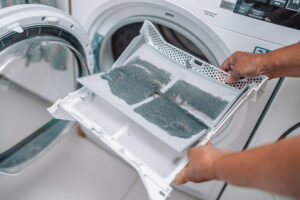
Lint accumulating at the exterior termination or around the dryer connection can point to a maintenance issue. The visible lint may be only part of the buildup; the duct can also collect material farther inside, especially where the run has turns. Cleaning the lint screen after each load does not clean the entire exhaust route.
Why a Clogged Dryer Vent Matters
Lint buildup can restrict airflow and contribute to excessive heat. The U.S. Fire Administration reports that failure to clean was the leading factor contributing to the ignition of home clothes dryer fires in its 2018–2020 data. This is a safety reason to address a suspected blockage promptly, in addition to the inconvenience of longer drying times. A clear vent also helps the dryer exhaust moisture as designed.
What a Professional Cleaning Should Cover
A dryer vent service should address the exhaust path from the dryer connection through the ductwork to the outdoor termination, subject to the system’s access and condition. The technician should remove lint and obstructions, check that the exterior flap can move freely, and flag a damaged or crushed duct that needs repair. Ask what sections are included and whether the technician will check airflow after cleaning.
The U.S. Fire Administration advises cleaning dryer vent ductwork every year. The Consumer Product Safety Commission also recommends cleaning lint out of the vent pipe at least annually. Homes with frequent dryer use or an unusually long or complex vent run may need an earlier check if warning signs appear.
Keep the Vent Clear Between Visits
Clean the lint screen before or after every load. Keep the area behind the dryer free of lint and items that can block airflow. Make sure the outdoor flap is unobstructed, and pay attention when drying times change. If the vent exits at a roof or another difficult location, leave that inspection and cleaning to a qualified professional.
Schedule Dryer Vent Cleaning
If your dryer is taking longer, the laundry room is unusually hot, or the outdoor exhaust seems weak, Advanced Air Duct Cleaning can inspect and clean the dryer vent. Contact our team to schedule service and get the exhaust path checked from the dryer toward the outside termination.