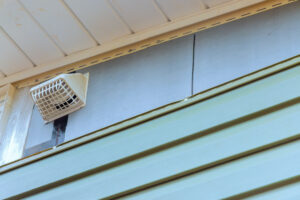
Most homeowners think of dryer vent maintenance as a way to remove lint and reduce fire hazards. But the exterior dryer vent cover is just as important. When a bird guard, vent hood, or backdraft flap is damaged, stuck open, or unable to close completely, wind-driven rain can enter the dryer exhaust duct. Over time, that unwanted water can create moisture problems, contribute to lint buildup, and potentially damage the dryer or surrounding areas of the home.
How Water Gets Into a Dryer Vent
A properly operating exterior dryer vent lets warm, moist exhaust air escape while the dryer is running. When the dryer shuts off, the damper should close to help keep rain, outdoor air, and pests out. If a flap remains partially open because of lint, a warped cover, broken hinge, or improperly fitted animal guard, heavy rain—especially rain driven sideways by wind—may enter the opening.
Depending on the duct’s slope, joints, and location, water can collect inside the duct or travel toward connections, wall cavities, or the laundry area. Not every open flap causes an interior leak, but an improperly closing termination increases the risk and deserves attention.
Why a Wet Dryer Duct Is a Serious Concern
Water intrusion and property damage. Water may escape at duct joints or other vulnerable connections, causing stains, damp drywall, damaged flooring, or deterioration of nearby materials.
Wet lint and reduced airflow. Lint exposed to moisture can mat together and stick to duct surfaces, making blockages more likely. Restricted airflow can extend drying times and increase overheating and fire risk.
Potential dryer damage. If water travels back toward the appliance, sensitive components may be affected. An appliance technician should evaluate any dryer that has been exposed to water.
Unwanted pests and debris. A defective exterior cover may also give birds or other animals a way to enter or nest, further restricting the vent.
Warning Signs Homeowners Should Not Ignore
- The outside vent flap stays open after the dryer stops or does not move freely while running.
- Water stains, drips, dampness, or a musty odor appear near the laundry room or along the vent route after storms.
- Clothes take longer than usual to dry, or the dryer becomes unusually hot.
- Visible lint, debris, or nesting material collects around the vent hood.
A Bird Guard Must Not Block the Exhaust
Not every product marketed as a “bird guard” is appropriate for a dryer. New Jersey’s residential code requires dryer exhaust terminations to have a backdraft damper and prohibits screens at the duct termination, because screens can trap lint. Any pest-resistant termination must be designed for dryer exhaust, allow the damper to work properly, and meet applicable code and manufacturer instructions.
What to Do If You Suspect Rain Is Entering
Do not ignore water near the dryer or a visibly damaged vent hood. Stop using the appliance if water may have reached it, and arrange for appropriate inspection before restarting. A qualified dryer-vent professional can inspect the exterior termination, evaluate lint buildup and airflow, and recommend cleaning or replacement of a defective cover. If water has affected the dryer itself, have the appliance checked by a qualified appliance technician; wet building materials may also need evaluation and repair.
Protect Your Dryer and Your Home with Advanced Air Duct Cleaning
At Advanced Air Duct Cleaning, we know dryer vent safety involves more than removing lint. The condition of the exterior termination matters, too. Routine dryer vent cleaning and inspection can help identify airflow restrictions, improper vent covers, stuck dampers, and warning signs of water intrusion before problems escalate.
Contact us to schedule a professional dryer vent inspection and cleaning with Advanced Air Duct Cleaning. A properly maintained exhaust system helps protect your home, improve dryer performance, and reduce preventable risks.