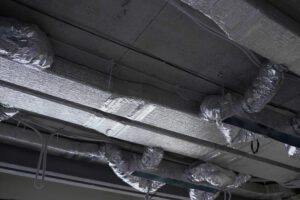
In many residential and commercial buildings, duct systems are constructed using internally lined or fiberboard ductwork. While these materials were originally selected for sound attenuation and thermal efficiency, they can deteriorate over time — releasing fiberglass and other particulates directly into your breathing air. For property owners, facilities managers, and safety‑conscious homeowners, duct encapsulation is not just a best practice — it is a critical step in protecting indoor air quality and occupant health.
Today’s construction and safety standards require the use of a collection device when drilling or cutting concrete because of the release of crystalline silica — a hazardous airborne particulate known to cause serious respiratory illness when inhaled. This safety regulation exists because once silica dust becomes airborne, it can be inhaled deep into the lungs and circulated throughout enclosed spaces.
How Fiberglass Deterioration Impacts Indoor Air Quality
Fiberglass within deteriorating duct linings behaves the same way. When the internal liner breaks down, fibers are released into the air stream and are carried throughout the home or building. Unlike dust on a surface, fiberglass particulates become part of the air you breathe — and exposure may lead to respiratory irritation, throat discomfort, eye irritation, worsening asthma symptoms, or other potential long‑term health concerns.
Why Repeated Air Circulation Increases Exposure
Inside a typical home or building, conditioned air is recirculated through the duct system approximately 4–8 times every hour. That means if fiberglass, dirt, or microbial contaminants are present inside the duct liner, those same pollutants are repeatedly distributed into occupied rooms — multiplying exposure over time. In healthcare, commercial, and school environments, this risk is even more significant due to continuous occupancy and extended operating hours.
What Duct Encapsulation Does and Why It Matters
Duct encapsulation provides a protective seal over deteriorating or exposed fiberglass surfaces inside lined or fiberboard duct systems. Professional‑grade encapsulant products are designed to lock fibers in place, restore surface integrity, improve cleanability, and prevent further particle release into the air stream. When performed by trained NADCA‑certified professionals using proper negative‑air collection equipment, encapsulation can significantly improve indoor air quality and extend the functional life of the duct system.
Professional Inspection and Encapsulation Services
At Advanced Air Duct Cleaning, our technicians thoroughly inspect internally lined and fiberboard ducts to identify deterioration, delamination, microbial growth, or exposed fiberglass. When encapsulation is recommended, we follow industry‑recognized procedures to prepare, clean, and seal affected duct surfaces — helping protect your system, your building, and the health of the people inside it.
If you suspect your duct system contains internal fiberglass lining or fiberboard components — or if you notice dust, fibers, or debris blowing from supply vents — schedule a professional inspection. Duct encapsulation may not just be a maintenance upgrade; it may be a necessary step in safeguarding your indoor air quality.