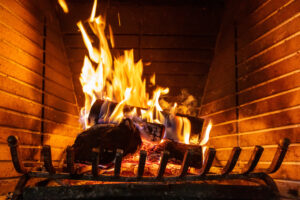
A roaring fire in the fireplace is one of life’s simple pleasures, but behind that cozy glow could be a hidden danger. Chimney fires often start quietly and escalate within minutes, reaching temperatures above 2,000°F. Understanding how a chimney fire begins — and what you can do to prevent it — is essential for protecting your home and family.
Step 1: Combustion Begins — The Fire Burns Wood
Every chimney fire starts with a simple act: lighting a fire. When you burn wood, the heat releases gases, tars, and unburned particles into the air. These byproducts travel upward with the smoke, beginning the chain reaction that can lead to dangerous buildup inside the chimney.
Step 2: Smoke Cools and Condenses
As the smoke rises through the chimney flue, it begins to cool. When this happens, the gases and particles condense on the inner walls of the chimney. Over time, these condensed particles form creosote — a sticky, tar-like substance that clings to the lining of your flue. Creosote can appear as flaky soot, crunchy residue, or a hard, shiny glaze depending on how long it’s been accumulating.
Step 3: Creosote Accumulates
The longer you burn fires without cleaning your chimney, the more creosote builds up. This buildup thickens layer by layer, narrowing the flue passage and reducing airflow. Restricted airflow means cooler flue temperatures and even more condensation — creating the perfect cycle for dangerous creosote accumulation.
Step 4: Ignition — The Spark That Starts the Fire
When the temperature inside your chimney reaches around 1,000°F, creosote can ignite. This may happen when you light a particularly hot fire or when sparks from the fireplace travel upward. Once ignited, creosote burns ferociously, producing loud popping sounds, roaring noises, and intense heat that can crack your flue liner.
Step 5: Rapid Fire Spread
Once burning, a chimney fire can reach over 2,000°F in minutes. This extreme heat can cause metal liners to warp and clay liners to crack, allowing flames to spread into surrounding walls, insulation, or attics. Even if the fire stays confined to the chimney, repeated incidents can severely weaken the structure and increase the risk of a full-scale house fire.
How to Stop a Chimney Fire Before It Happens
The good news? Chimney fires are completely preventable. Here are proactive steps every homeowner should take:
- Schedule annual chimney inspections: Follow NFPA 211 guidelines and have your chimney inspected once a year by a certified professional.
- Clean regularly: Have your chimney swept when creosote buildup reaches 1/8 inch or more.
- Burn only dry, seasoned hardwoods: Wet or green wood produces excess smoke and accelerates creosote formation.
- Maintain good airflow: Keep the damper fully open while burning and ensure your chimney cap is clear of debris.
- Avoid smoldering fires: Small, slow-burning fires release more smoke and creosote. Build hot, efficient fires instead.
- Install a chimney cap: This prevents leaves, rain, and animals from entering and obstructing the flue.
- Use creosote-reducing products: Additives can help dry out soft creosote, making it easier for professionals to remove.
What to Do If You Suspect a Chimney Fire
If you ever hear roaring noises, see sparks shooting from the top of the chimney, or smell intense burning odors, act immediately:
- Close the damper if it’s safe to do so.
- Get everyone out of the house and call 911.
- Do not use water on the fire — it can cause steam explosions and damage your chimney.
- Once extinguished, schedule a full inspection before using your fireplace again.
Trust Advanced Air Duct Cleaning for Fire Prevention
At Advanced Air Duct Cleaning, we specialize in chimney inspections, sweeping, and maintenance that follow NFPA and NCSG standards. Our professional technicians use high-powered rotary brush systems, HEPA vacuums, and video inspections to ensure your chimney is safe and clean. We help homeowners stop chimney fires before they start — with preventive care that keeps your heating system efficient and your family safe.
Protect your home from the inside out. Contact Advanced Air Duct Cleaning today to schedule your chimney inspection and cleaning.