When heating costs rise, the first instinct may be to adjust the thermostat or replace equipment. But if heated air escapes through leaks in the ductwork, your furnace has to work harder to deliver comfort to the rooms you use. Aeroseal duct sealing addresses that loss at its source by sealing leaks from inside the ducts, including many that are difficult to reach by hand.
The Hidden Cost of Leaky Ducts
In a typical house, 20% to 30% of the air moving through the duct system is lost through leaks, holes, and poor connections, according to ENERGY STAR. That does not mean every household wastes 20% to 30% of its total heating bill. It does mean a significant share of conditioned air may never reach its intended rooms.
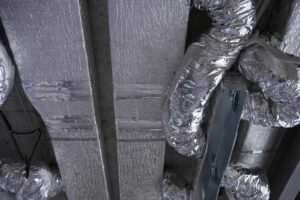
Leaks matter most when ducts run through an unheated attic, crawlspace, or garage. Warm air can escape into those spaces, while return-side leaks may pull in cold, dusty air. The result can be uneven temperatures, long heating cycles, and utility bills that feel out of step with how comfortable your home actually is.
How Aeroseal Works
Aeroseal is an aerosol-based duct sealing process. A technician isolates and pressurizes the duct system, then introduces sealant particles into the airflow. The particles collect at leakage points and build a seal at the edges of those openings. The process is designed to reach leaks inside finished walls and other inaccessible areas without opening each duct connection.
The system is tested before and after sealing, so you can see the measured change in duct leakage. A proper assessment also identifies disconnected ducts, damaged components, insulation issues, or airflow problems that may need separate repairs. Aeroseal is one part of a sound HVAC plan, not a substitute for fixing every duct defect or servicing the furnace.
What Can You Expect To Save
Sealing ducts can reduce wasted heating and cooling energy, but the financial result depends on the initial leakage, duct location, fuel rates, weather, equipment, and how the home is used. ENERGY STAR says sealing and insulating ducts can improve heating and cooling efficiency by as much as 20% in some homes. That is a potential efficiency improvement, not a guaranteed reduction in an entire utility bill.
If you heat with oil or natural gas, a leakage test offers a better starting point than a generic savings promise. It shows whether there is enough leakage to warrant sealing and gives you a measurable before-and-after result. Sealing can also help conditioned air reach rooms that have been hard to heat or cool.
Is Your Home a Good Candidate
Consider a duct evaluation if some rooms stay cold, the furnace runs frequently, utility bills have climbed, or ducts pass through an attic, crawlspace, or garage. Homes with newer equipment can still have leaky ductwork; replacing a furnace alone does not close gaps in the distribution system.
Advanced Air Duct Cleaning can assess your ductwork and explain whether Aeroseal duct sealing is appropriate for your home. Contact our team to discuss a duct leakage evaluation and the next steps toward a more efficient, comfortable heating system.