
A damp spot, musty odor, peeling paint or frost inside an exterior wall might seem unrelated to your heating and cooling system. Yet hidden air leaks in ductwork can change the temperatures and pressures inside a wall, setting the stage for condensation, mold growth and wintertime frost. Understanding the connection can help homeowners address the underlying problem before moisture damage spreads.
What happens when ductwork leaks into an exterior wall?
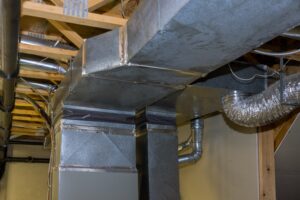
Your HVAC system is designed to deliver conditioned air to rooms through sealed ducts. When a supply connection, seam or joint leaks into a wall cavity, heated or cooled air can escape behind the drywall instead. Leaky return ducts can also pull humid air into building cavities or alter indoor air pressure. These airflow changes may create the combination moisture problems need: humid air, a cold surface and limited drying potential.
Summer: Cool air leaks can create hidden condensation and mold
During humid summer weather, an air-conditioning supply leak may chill drywall, framing or sheathing within a wall. When warm, moisture-laden air reaches a surface that is colder than its dew point, water vapor can condense into liquid water. Over time, persistent dampness may support mold and mildew, stain walls, damage insulation or deteriorate building materials. A poorly sealed return may also draw humid outdoor air into an assembly, adding to the moisture burden.
Winter: Warm air leakage can lead to frost inside walls
In colder months, warm indoor air escaping into an exterior wall can contact cold framing or sheathing. Moisture in that air may condense and, when the surface is below freezing, form frost. When temperatures rise, frost can thaw and wet nearby insulation, wood or drywall. Repeated freeze-and-thaw cycles can leave materials damp and create conditions for decay or mold even after winter ends.
Important: Not every instance of mold or frost is caused by duct leakage. Roof or flashing leaks, plumbing leaks, poor insulation, air-barrier gaps, indoor humidity and ventilation problems can produce similar symptoms. A proper inspection should identify the actual moisture source.
Warning signs homeowners should not ignore
- Musty odors near exterior walls, vents or enclosed chases
- Recurring wall stains, bubbling paint or peeling finishes
- Damp insulation or visible condensation during humid weather
- Unexplained frost or ice inside wall or attic cavities during winter
- Rooms with uneven heating or cooling and unusually high energy bills
Why duct sealing belongs in the solution
Sealing duct leaks helps keep conditioned air inside the duct system, where it belongs. That can reduce unwanted temperature differences and pressure imbalances that drive moist air through the building envelope. ENERGY STAR estimates that a typical home loses approximately 20%–30% of duct airflow through leaks, holes and poor connections. Actual conditions and energy savings vary from home to home.
At Advanced Air Duct Cleaning, we can help homeowners evaluate duct leakage and discuss sealing solutions, including Aeroseal technology where appropriate. Aeroseal seals many hard-to-reach leaks from inside compatible duct systems. It is not, however, a substitute for repairing wet or mold-damaged materials, correcting insulation or vapor-control defects, or stopping other water sources. Effective remediation may require coordinated HVAC and building-envelope repairs.
Protect your home before the damage grows
If you are seeing moisture, suspect hidden duct leakage or notice seasonal comfort problems, investigate promptly. An assessment of the duct system and surrounding building materials can help determine whether duct sealing, insulation improvements, humidity control or moisture remediation is needed.
Contact us today to schedule a ductwork evaluation with Advanced Air Duct Cleaning. Proudly serving New Jersey and surrounding service areas, we help customers take a proactive approach to air distribution, efficiency and indoor air quality.