

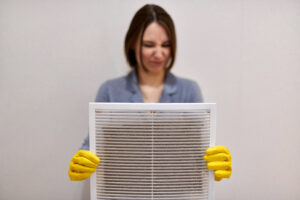
One of the most common complaints homeowners experience during the warmer months is a musty smell coming from the air conditioning system when the AC first turns on. That damp, stale odor can make a home feel uncomfortable and may indicate underlying issues within the HVAC system. At Advanced Air Duct Cleaning, we often help homeowners identify the causes of musty odors and improve the cleanliness and performance of their HVAC systems.
Why Musty Odors Develop in HVAC Systems
A musty smell is typically caused by excess moisture somewhere within the HVAC system. Air conditioning systems naturally remove humidity from the air as they cool the home. When moisture combines with dust, dirt, or organic material inside the system, it can create an environment where mold, mildew, and bacteria may develop. As the AC operates, odors from these contaminants can circulate throughout the home.
Common HVAC Components That Cause Musty Smells
One of the most common sources of musty odors is a dirty evaporator coil. The evaporator coil is responsible for cooling the air, and because it remains cold during operation, condensation naturally forms on its surface. Over time, dust and debris can accumulate on the coil, trapping moisture and creating ideal conditions for microbial growth. When the system turns on, the odor from the contaminated coil may spread through the ductwork and into living spaces.
Dirty ductwork can also contribute to musty odors. Over the years, dust, debris, pet dander, and moisture can accumulate inside air ducts. If moisture is present within the duct system, microbial growth may develop on dust and debris inside the ductwork. When the HVAC system operates, those odors can become noticeable throughout the home.
Moisture and Humidity Problems That Contribute to Odors
Another common issue is a clogged or improperly draining condensate line. The condensate drain line removes moisture collected by the air conditioning system. If the line becomes blocked, standing water can accumulate within the system and contribute to mildew or mold odors. Regular HVAC maintenance can help identify and prevent these drainage issues before they become larger problems.
High indoor humidity levels may also contribute to musty smells. Homes with excessive humidity create an environment where moisture-related odors are more likely to occur. Poor ventilation, air leaks, and HVAC inefficiencies can all contribute to elevated humidity inside the home.
How to Identify and Resolve Musty HVAC Odors
In some cases, musty odors may indicate microbial growth inside HVAC components or insulation near the system. Because HVAC systems continuously circulate air throughout the home, unpleasant odors can quickly spread into multiple rooms. A professional HVAC inspection can help determine the source of the odor and identify whether cleaning or repairs may be needed.
Improving Indoor Air Quality and HVAC Performance
At Advanced Air Duct Cleaning, we recommend routine HVAC maintenance, evaporator coil cleaning, and professional duct inspections to help maintain cleaner indoor air and reduce odor concerns. Professional cleaning can remove dust and debris buildup from HVAC components and improve overall system performance and airflow.
If your home smells musty when the AC turns on, do not ignore the issue. Persistent odors may indicate moisture problems, dirty HVAC components, or microbial growth within the system. Addressing the problem early can help improve indoor air quality, reduce odors, and protect the efficiency and longevity of your HVAC system.
For professional HVAC inspections, duct cleaning, evaporator coil cleaning, and indoor air quality solutions, contact Advanced Air Duct Cleaning today.